
What is Jesmonite?
This is a question I am asked at every single market so I thought I'd dedicate a blog post to answering it!
Every time I pop up with a stall at a market I would say at least 5x people ask me ‘What is Jesmonite?’ so it seemed like a good idea for me to dedicate a blog post to answering this question and share with you why I enjoy working with it so much!
For those who don’t know already, all of my Chocolate Fridge Magnets, Chocolate Pin Badges, Drinks Coasters, Espresso Coasters, Placemats and Furniture Knob Handles are made with a form of Jesmonite.
Even the frames I produce for my Food Paintings are made with Jesmonite.
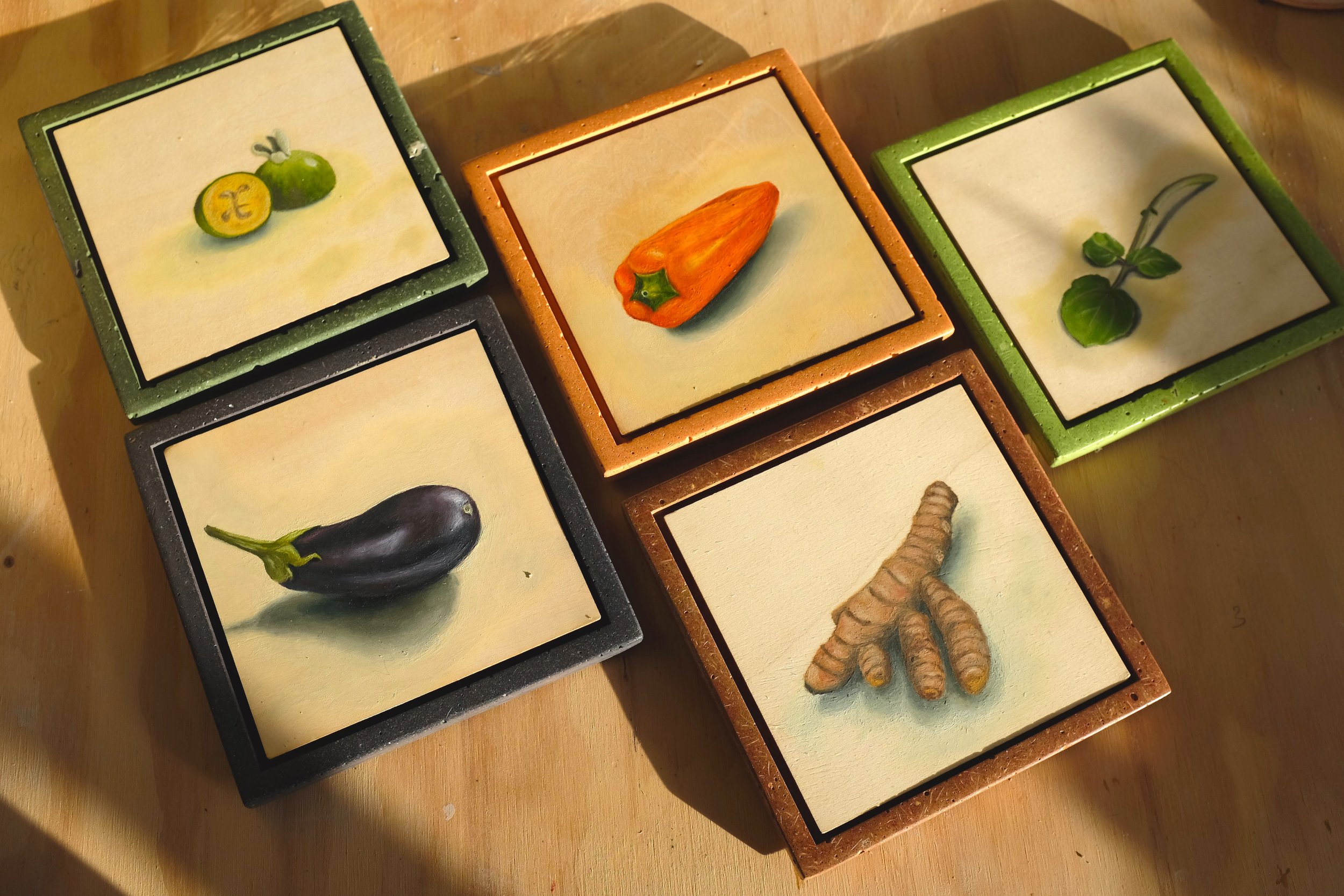
A collection of my Food Paintings mounted in frames made from Jesmonite AC730
Jesmonite has exploded in popularity among many artist, designers, hobbyists and DIY enthusiasts lately. If you’ve been scrolling through Instagram, Tik Tok or Pinterest and you might have seen pictures or videos of smooth terrazzo coasters, marbled trays, or brightly coloured plant pots.
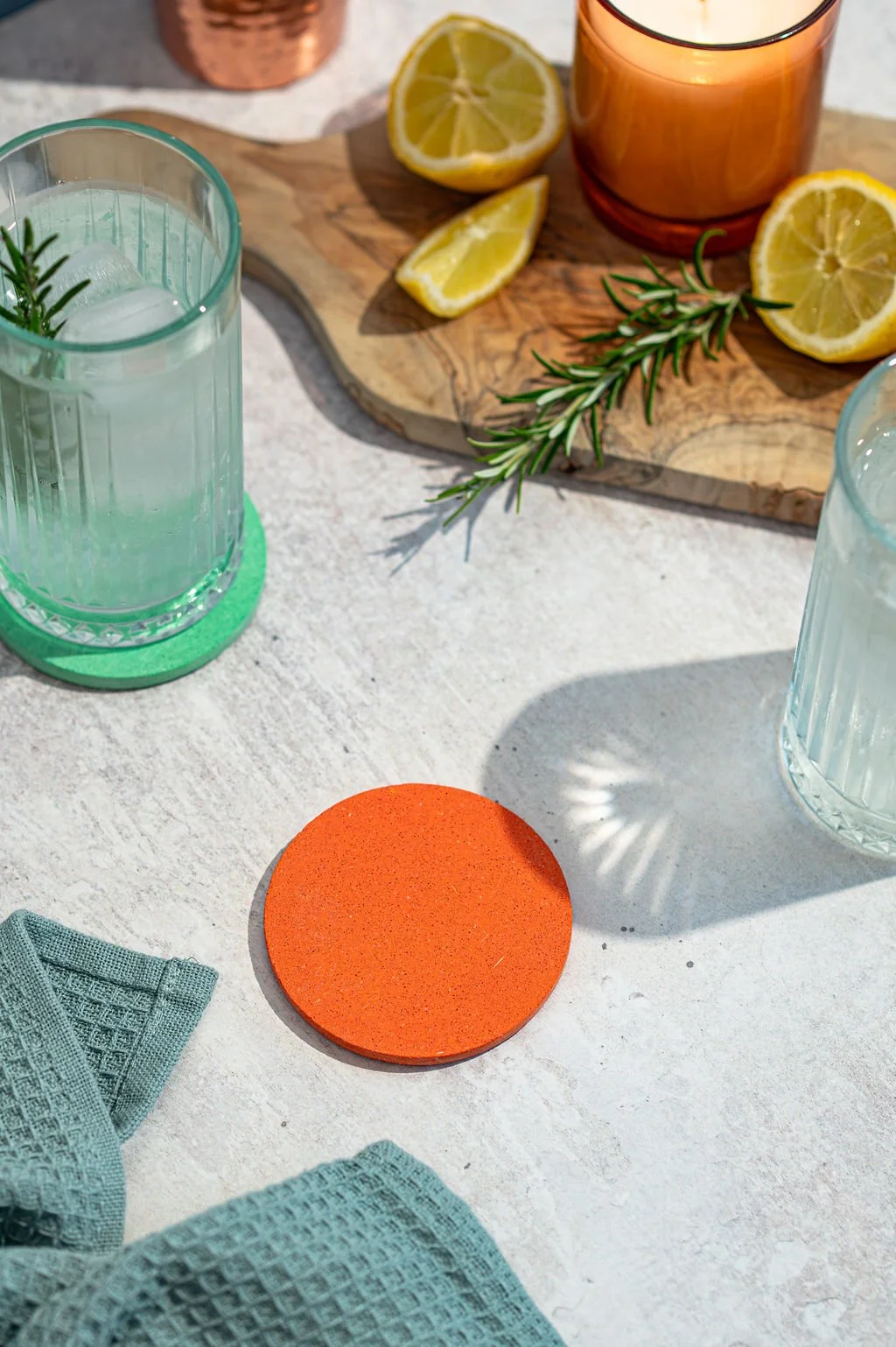
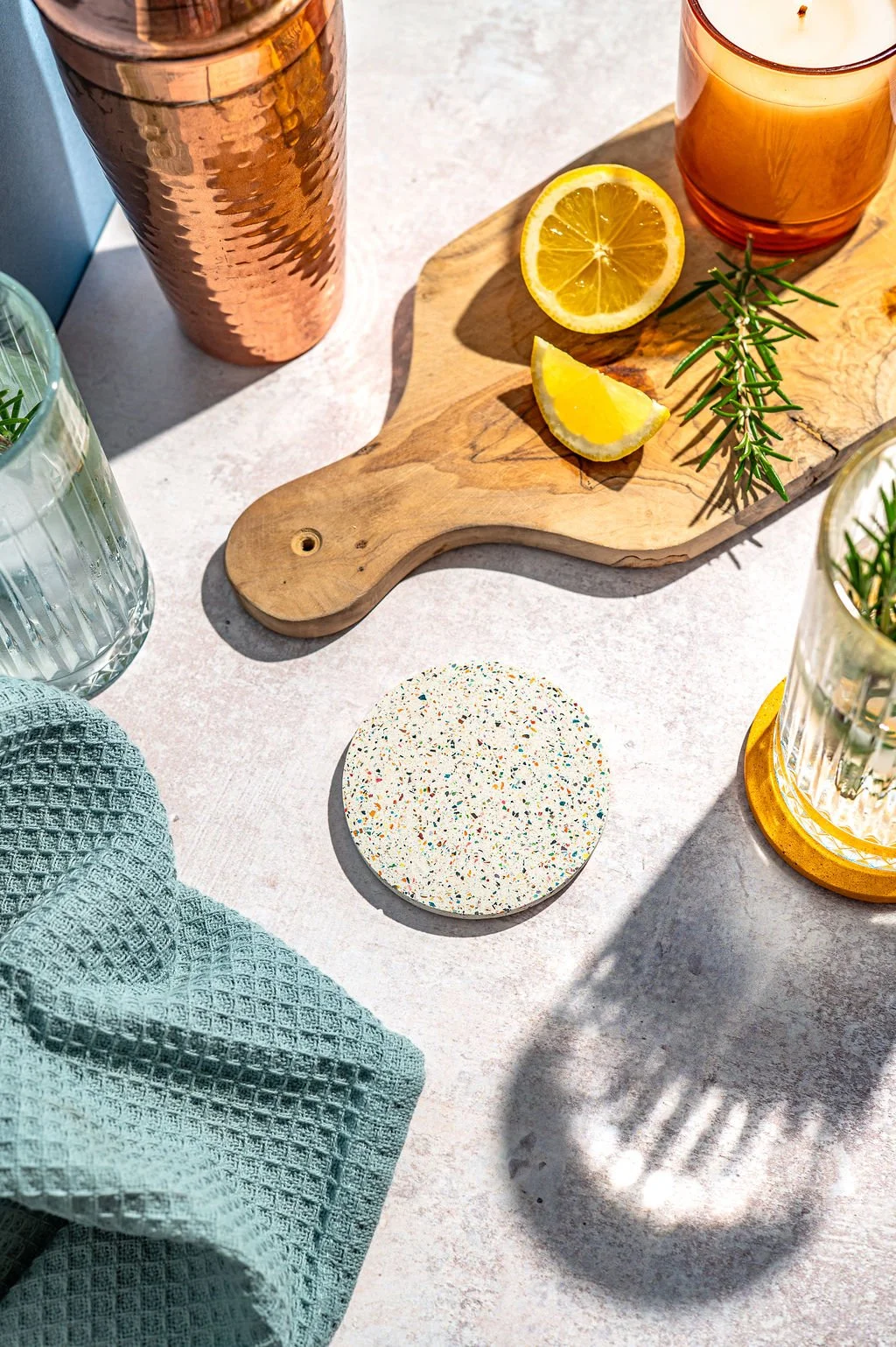
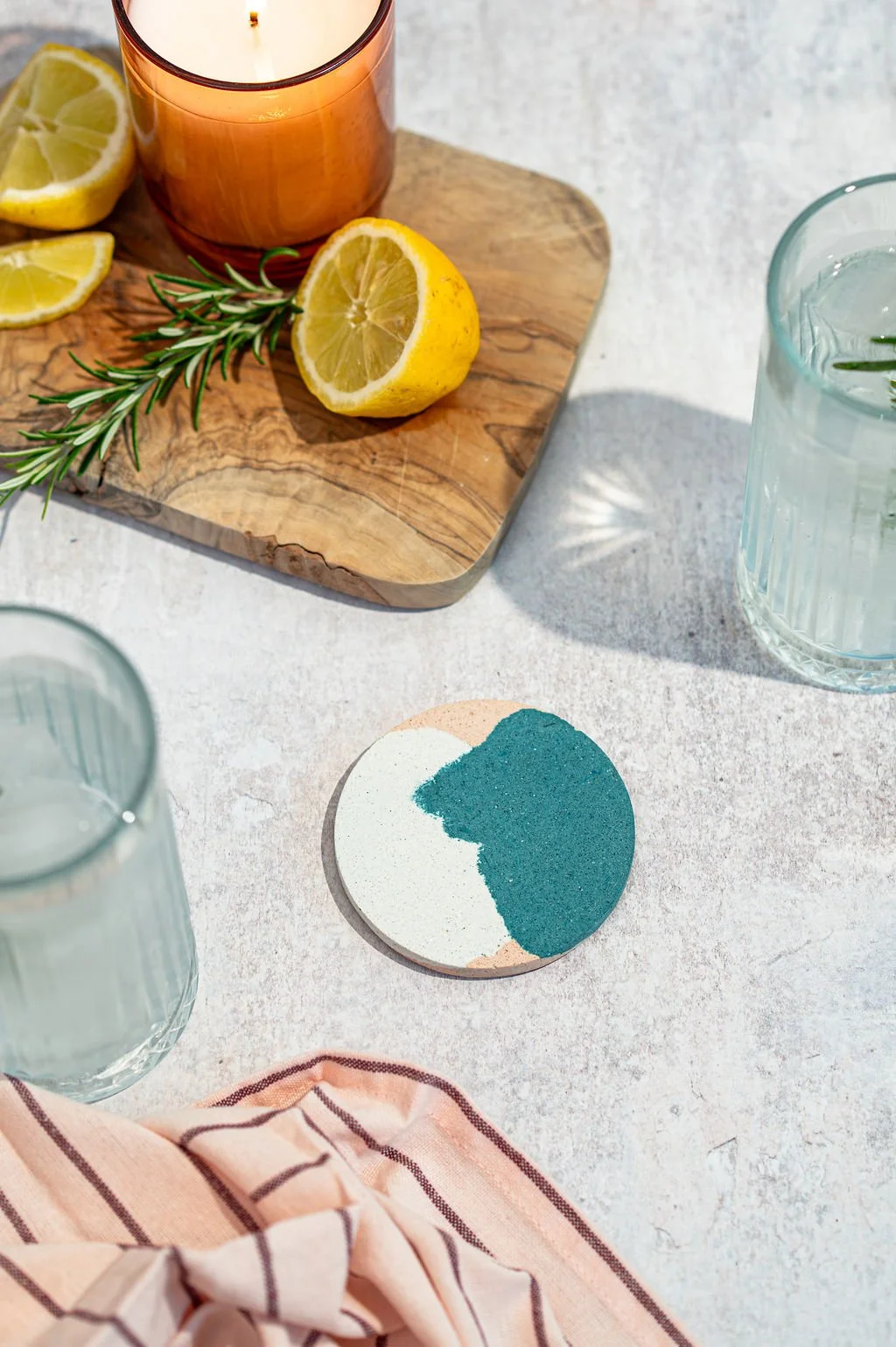
From left to right: Examples of my Plain, Terrazzo and Multi Colour Splatter Patterned Drinks Coasters all made with Jesmonite AC730. Image credits: Jilly Jilly Studio
While these pieces look like heavy, expensive stone or polished concrete, they are actually made from a fascinating material called Jesmonite.
But what exactly is it, and why has it suddenly become such a popular material for artists, makers, and DIY lovers?
The Basics: What Exactly is Jesmonite?
Invented in the UK in 1984 by Peter Hawkins, Jesmonite was originally designed as a lightweight, safe alternative to fiberglass and concrete for the construction and architectural industries.
Chemically, Jesmonite is a composite material - a combination of two main ingredients:
A gypsum-based mineral base (a dry powder)
An acrylic resin (a liquid)
When you mix these two components together, a chemical reaction occurs causing the liquid to cure into a rock-hard, durable solid form. Think of Jesmonite as the eco-friendly, modern cousin of concrete and epoxy resin.

A shot of me in the studio mixing the two component parts of Jesmonite together ahead of pouring into moulds. Image credit: Jilly Jilly Studio
There are various types of Jesmonite. AC100 is a versatile, user-friendly acrylic resin and gypsum composite designed primarily for indoor decorative projects. In contrast, the AC630, 730, and 830 series are cement-based composites built for outdoor durability. Because they behave like traditional cement rather than resin, this outdoor range requires more patience, technical knowledge, and a bit of a learning curve compared to the straightforward AC100.
Thanks for reading this Art for Foodies Studio Blog post so far!
Subscribe to my Substack for free to receive new posts directly to your inbox and support my work.
Why is Jesmonite so Popular to Work With?
Jesmonite has made such a big impact in the design world for a few good reasons:
It’s Eco-Friendly and Safe: Unlike epoxy resin, which requires heavy ventilation and gives off intense chemical fumes, Jesmonite is water-based and non-toxic. It contains zero VOCs (Volatile Organic Compounds which are harmful to your health) making it a very safe and easy material to work with. However it is worth reading Olivia Aspinall’s article How Sustainable Is Jesmonite? for a deeper dive into the materials’ wider eco credentials. For example, it is problematic for recycling, which is one of the reasons why I offer refresh and repair services to either restore your pieces to their former glory or embrace the art of repair with my visible mending options similar to Kintsugi should you ever have an accident and chip or break one of the pieces you buy from me!
The “Chameleon” Factor: It can mimic many different surfaces. Depending on how you treat it, what pigments you add, or what fillers you mix in (like metal powders or stone chips), Jesmonite can look like marble, concrete, limestone, or even bronze. Check out the image gallery on my Bespoke Commissions page to view the vast array of colours and finishes you can achieve!
Fast Curing: Concrete can take days to cure. Jesmonite, on the other hand, sets much faster. For example, Jesmonite AC100 usually sets in the mould within 20 to 30 minutes and can be completely cured within a few hours. Other Jesmonite types such as AC730 can take a bit longer requiring 4-24 hours to demould depending on the size of your project.
Strong and Lightweight: It’s significantly lighter than concrete but highly impact-resistant, making it perfect for everything from delicate jewellery to large-scale furniture. Glass fibre strands can be added to provide further strength which is what I tend to do for my Coasters and Placemats. Fibre glass is not very eco-friendly however I only add in around 2-3% of the total mix and this helps to make your pieces last for much longer and survive a few accidental drops along the way!
Thanks for reading Art for Foodies Studio Blog! This post is public so feel free to share it.
AC100 vs. Other Types: Which One Do Crafters Use?
AC100 | The All-Rounder & Beginner Favorite
Best For: Decorative moulded objects such as coasters and trays
Key Features: Known as “the ultimate chameleon,” this original formula can mimic almost any surface, colour, or texture.
User Profile: Incredibly user-friendly, making it the top choice for beginners.
This is the one I use for my decorative Chocolate Fridge Magnets and Chocolate Pin Badges
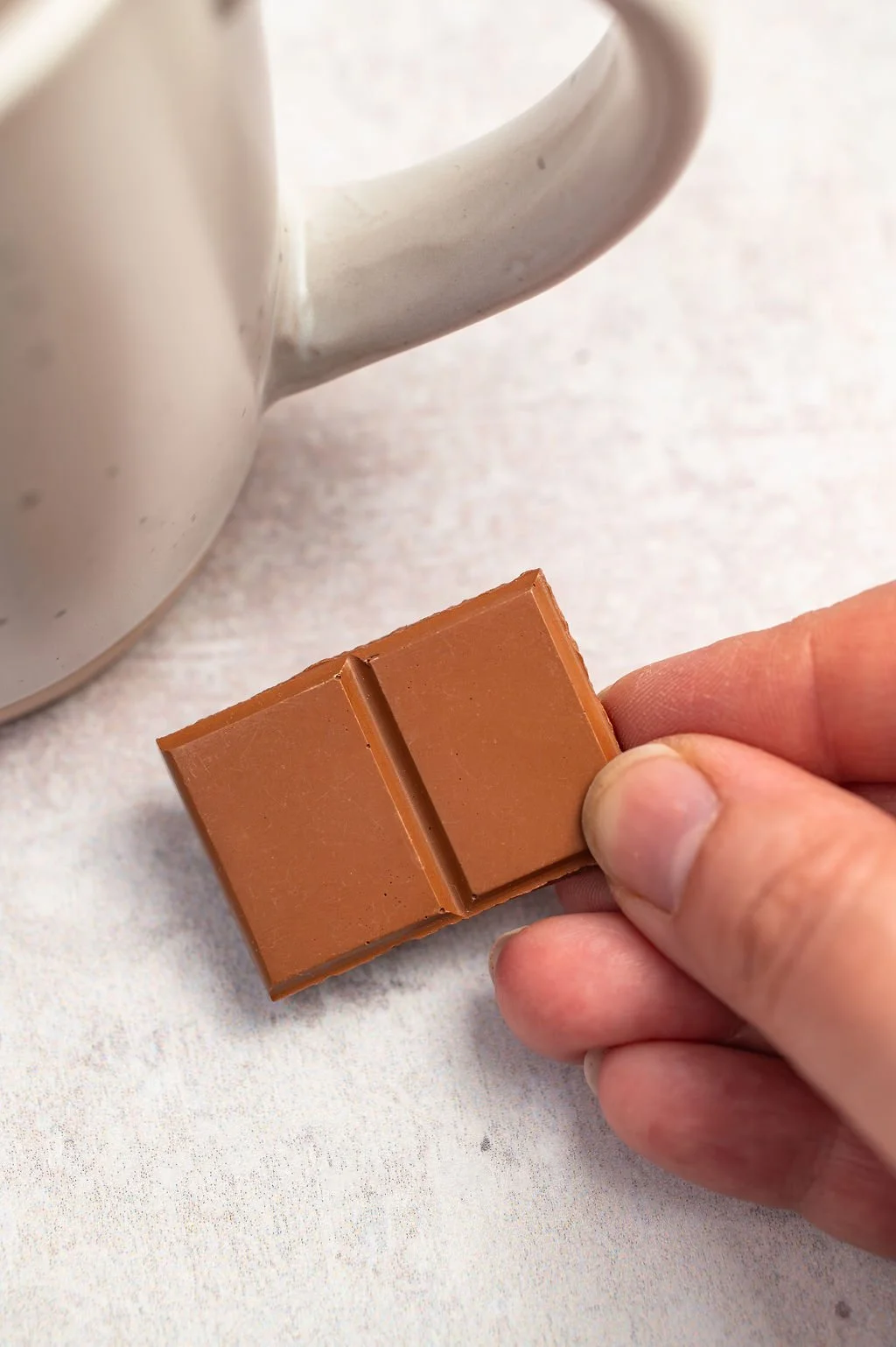
One of my Milk Chocolate Fridge Magnets made with Jesmonite AC100. Image credit: Jilly Jilly Studio
AC200 | The Modeller’s Choice
Best For: Prototyping, modelling, and carving.
Key Features: Delivers exceptional edge detail and dimensional stability. Crucially, it won’t degrade expanded polystyrene (EPS), allowing creators to freely use EPS as a lightweight core or base for large sculptures and master molds.
AC300 | The Budget-Friendly Alternative
Best For: Cost-conscious projects and general molding/laminating where high performance isn’t critical.
Key Features: Very similar to AC100 but features a lower acrylic content. This results in slightly less intense color reproduction, making it ideal for projects where budget takes priority over maximum performance.
AC630 | The Heavy-Duty Exterior Solution
Best For: Large-scale external cladding panels and building facades exposed to extreme weather.
Key Features: Engineered for superior strength, durability, and dimensional stability. Its unique strength allows it to be cast incredibly thin across massive surface areas without losing structural integrity or fine surface detail.
AC730 | The Architectural Stone Finisher
Best For: External architectural elements and weathering-resistant decor.
Key Features: Highly resistant to the elements with low permeability. Unlike standard Portland cement, its low-alkali formula drastically reduces efflorescence (unsightly white staining), keeping its colours vibrant.
Finishes: Available in 11 stone mimicking finishes. An acid-etch wash is used post-casting to reveal a stunning, textured stone aggregate finish.
This is the type I use for my Drinks Coasters, Espresso Coasters, Placemats and Furniture Knob Handles for it’s superior strength, low permeability and weathering-resistant qualities.
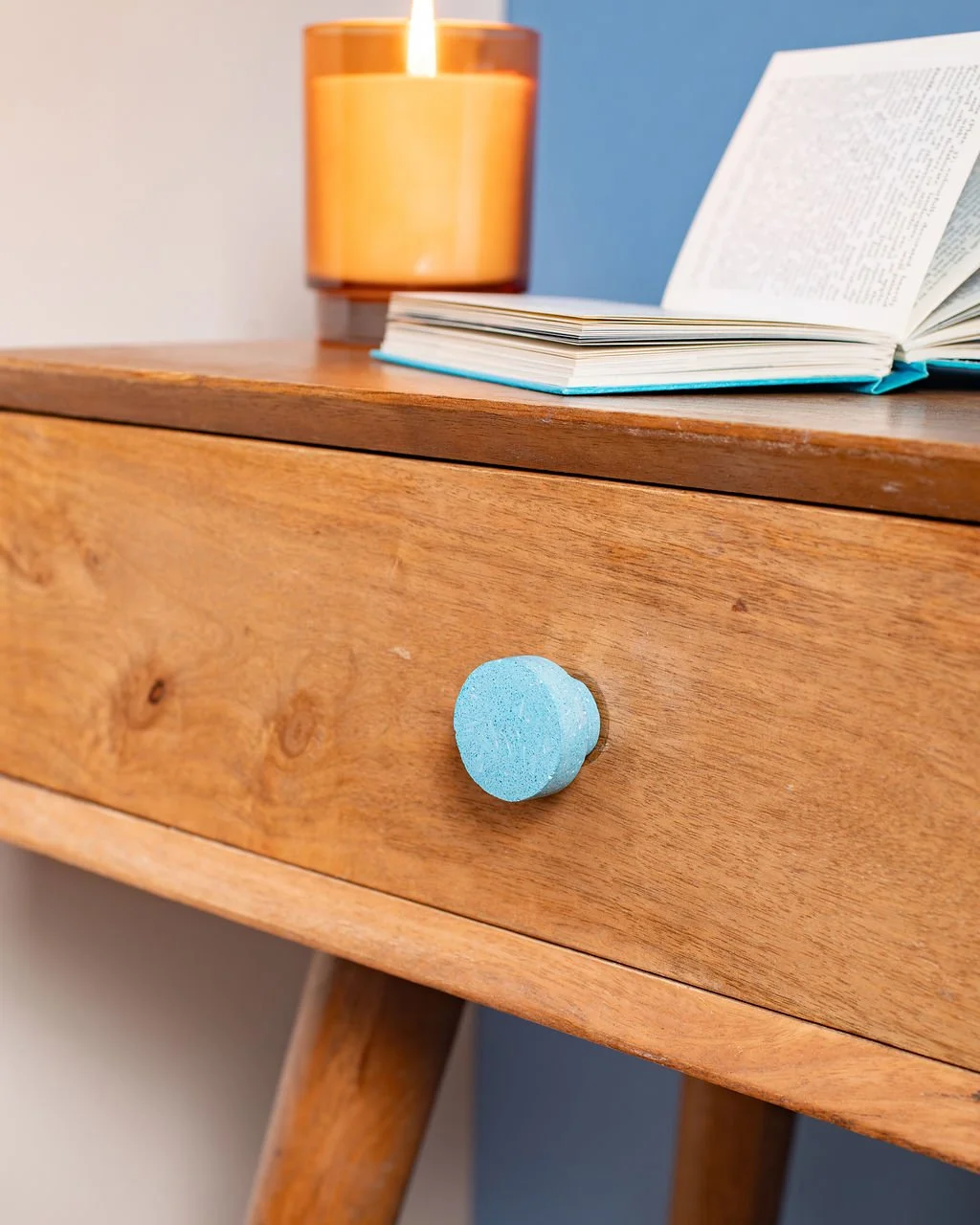
One of my Furniture Knob Handles made with Jesmonite AC730. Image credit: Jilly Jilly Studio
AC830 | The Solid Stone Specialist
Best For: Water features, statues, reinforced laminates, and heavy decorative cast stone.
Key Features: Shares the same extreme weather durability as AC730 but is specifically formulated for thick, solid casting applications rather than thin panels.
If you enjoyed this post, then help fuel my next one (literally!) by buying me a coffee!
How It Works: The Basic Process
Making something out of Jesmonite is surprisingly simple, which is why it’s so addictive. The process generally follows these steps:
1.Measure the Ratio: 1-2 minutes.
Jesmonite AC100 requires a strict 2.5:1 weight ratio (2.5 parts powder to 1 part liquid). Always use a digital scale for accuracy. Other Jesmonite types have different weight ratios.
2.Mix and Pigment: 2-3 minutes.
Mix the liquid and powder together thoroughly until you get a smooth, pancake-batter consistency. This is when you stir in water-based pigments to create custom colours. You can also add various additives at this stage to change the material’s materials depending on your project. For example, you can add retarders to slow the curing process and give you more time to work with the materials before it sets, or you can add a substance called thixotrope to AC100 to make the mixture much thicker and brush-able, helping you to work the mixture into intricate surface areas of a more detailed mould.
3.Pour and De-bubble: 2 minutes.
Pour the mixture into a silicone mould. Give the edges of the mould a good tap to force any trapped air bubbles to rise to the surface. Top tip: I like to use a small massage gun to vibrate the table I’m working on!
4.Unmold and Sand: 30 minutes later for Jesmonite AC100, best to leave overnight for other types.
After about 30 minutes, the piece will feel warm to the touch (the chemical reaction creates heat). I like to gently press a finger nail into the surface, if it leaves an indentation then leave a bit longer, if not then you can carefully pop it out of the mould! It’s still fairly fragile at this stage so it’s best to let it dry completely overnight, then sand it under water to reveal terrazzo chips or smooth out edges. For other Jesmonite types it’s safer you’ll need to give it a bit longer. I usually wait a few hours before trying the finger nail technique for my Jesmonite AC730 pieces.
If you’d like to learn how to work with Jesmonite, I run a series of Jesmonite Workshops in Glasgow, perfect for beginners!
Click below for my upcoming workshop dates:
Is Jesmonite Food-Safe or Waterproof?
Two of the most common questions about Jesmonite are whether it can handle water and if you can eat off it.
The Short Answer: Jesmonite is naturally porous (like stone or terracotta) and is not food-safe.
However, you can make Jesmonite AC100 water-resistant and stain-resistant by applying a specialised acrylic sealer (which I do for all my products!) Once sealed, a Jesmonite tray can happily live in your bathroom to hold soap, or be wiped down with a damp cloth. Just avoid putting it in the dishwasher, microwave, or using it to serve unpackaged food.
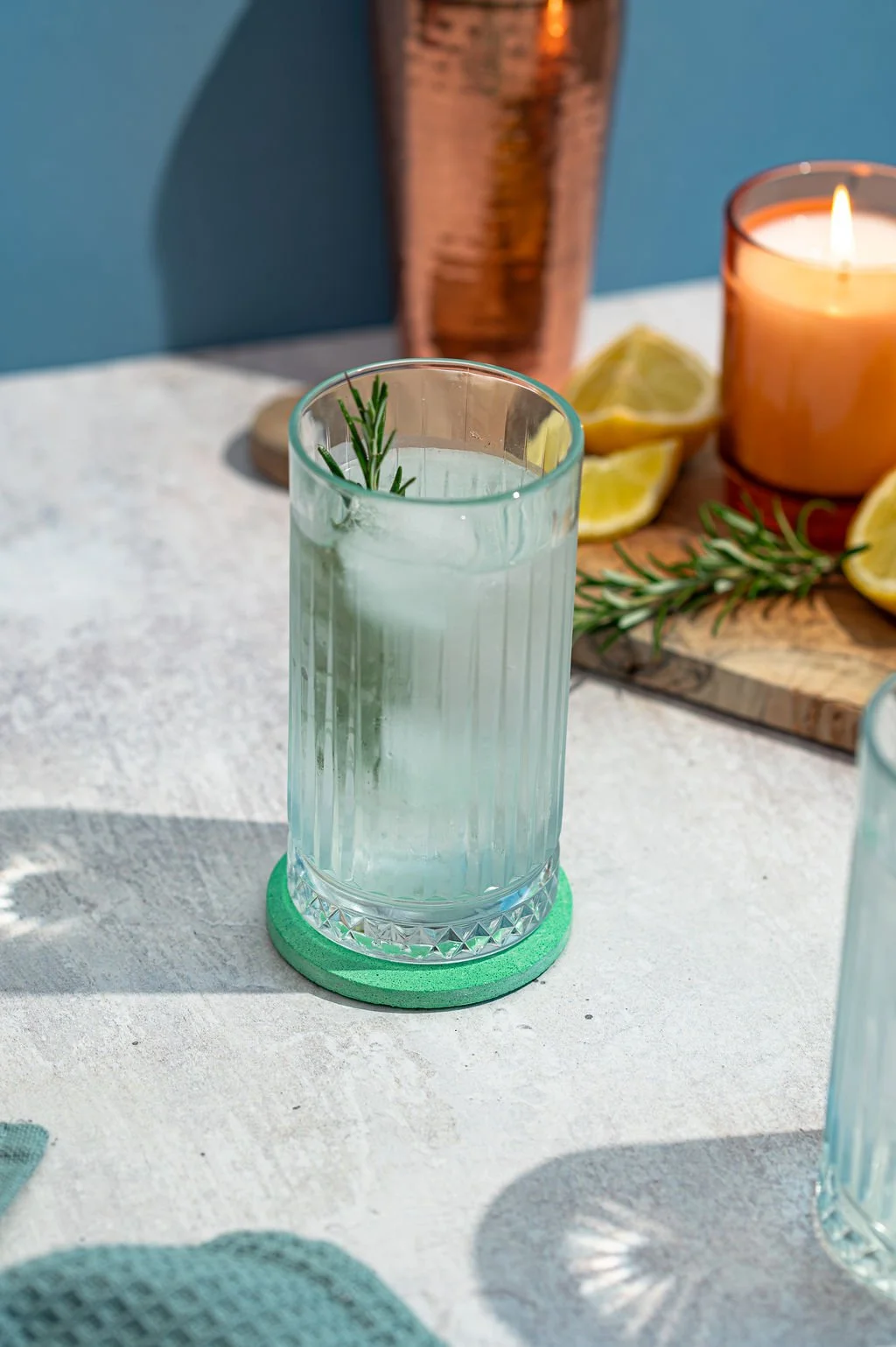
One of my fully sealed and water resistant Drinks Coasters in a hand-mixed Jade Green colourway. Image credit: Jilly Jilly Studio
I tend to use AC730 for all my Drinks Coasters, Espresso Coasters, Placemats and Furniture Knob Handles for it’s superior strength and for a more natural stone-like finish which I seal with a Jesmonite’s own Penetrating Sealer. This provides invisible protection against water and oil and provides stain resistance against many liquids and environmental contaminants. In addition I provide detailed care instructions with every order to ensure your pieces are kept looking their best. In short, you just need to wipe up any spillages up with a damp cloth in a timely manner to prevent any staining - much like how you would with any marble, concrete or wood surfaces.
Ready to Try It?
Whether you want to start a side-hustle selling beautiful handmade homeware or you just want a satisfying weekend DIY project, Jesmonite is one of the most forgiving, creative, and rewarding materials you can work with.
Remember to check out my Workshops page if you’re based in Glasgow and would like to learn different ways of using Jesmonite and how to make your own lovely homewares!

A shot of me pouring some freshly mixed Jesmonite AC730 into my Coaster moulds. Image credit: Jilly Jilly Studio
Thanks for reading this Art for Foodies Studio Blog post so far!
Subscribe to my Substack for free to receive new posts directly to your inbox and support my work.
Further Reading
If you’d like to know even more about Jesmonite then I recommend the following resources for further information: